Find Out How the World Sees You
Test Yourself
Introvert Vs Extrovert Quiz: Find Your Type on Spectrum
 The 4 Introvert Types: A Deep Guide to Understanding Benefits
New Updates

Your Complete Guide to the Introversion–Extroversion Spectrum Quiz
Why Personality Energy Matters More Than You Think
Most people feel their social energy change depending on context, time of day, and the demands of...

Introvert Vs Extrovert Test: A Practical Guide to Understanding Your Social Energy Profile
What This Assessment Really Measures and Why It Matters
The way you regain energy after a long day reveals more about your personality than a thousan...

The Complete Guide to Personality Energy Styles and How to Harness Them
What the Spectrum Really Means
People differ in how they gain energy, process stimulation, and choose their social environments, yet many assume pers...
Introvert or Extrovert Personality Test
Get StartedDiscover the Real Difference Between Introvert and Extrovert With Our Quiz
Across psychology, introversion describes a stable tendency toward lower-stimulation environments, reflective attention, and deliberate pacing. Rather than indicating shyness or social anxiety, it points to how a person recharges energy and focuses their inner world. Researchers trace the construct to early temperament studies and to modern trait models, where it sits on a continuum instead of a rigid box. The most accurate way to understand it is as a preference for depth, meaningful engagement, and autonomy over constant external buzz.
In practical terms, the inquiry captured by what is the introvert invites us to examine how attention and energy flow between the inner and outer worlds. Numerous studies highlight the advantages of quiet persistence, including stronger listening, careful information processing, and lower error rates under pressure. While cultural narratives sometimes celebrate nonstop sociability, many achievements depend on sustained focus and thoughtful preparation. That is why healthy work cultures make room for both quiet rumination and collaborative bursts, allowing people to align tasks with their optimal cognitive rhythm.
For many readers, the phrase is introvert a personality raises the long-standing debate about hard types versus flexible trait profiles. Contemporary evidence shows people are elastic, yet they maintain reliable patterns over time, especially in how they prefer to gather energy and make sense of stimuli. This means identity develops through both inborn temperament and learned strategies that support well-being. In day-to-day life, the result is a rich mosaic of preferences that can be harnessed to build sustainable careers, resilient relationships, and a life that matches one’s authentic tempo.

- Introversion centers on energy management and sensory thresholds.
- It favors depth, reflection, and intentional social contact.
- It exists on a continuum and gains strength with supportive habits.
How Energy and Social Interaction Shape Everyday Experience
Neuroscience suggests that people vary in baseline arousal and sensitivity to stimulation, which explains why some thrive amid lively chatter while others excel in spacious quiet. Environmental intensity, social cadence, and recovery time all factor into how productive and fulfilled a person feels. When rhythms align with these needs, motivation strengthens and stress declines, yielding better outcomes at work, school, and home. It is not about avoiding people; it is about calibrating complexity to sustain clarity and poise.
To widen the lens, many readers also ask about what is the extrovert in daily practice, because contrast illuminates the full spectrum of human behavior. A related concept appears in classical typology through the phrase extraverted meaning, which refers to an outward orientation of attention toward people, action, and situational cues. These patterns often coexist in teams where complementary strengths drive innovation and balance. With this perspective, collaboration becomes a dance of alternating tempos rather than a contest of opposing styles. In modern workplaces, the phrase introvert extrovert often surfaces when managers design meetings, creative cycles, and communication norms. High-quality cultures mix asynchronous thinking time with focused collaboration, reducing meeting overload and enabling richer contributions. Leaders can circulate agendas early, invite written input, and reserve quiet blocks for complex problem-solving. These straightforward shifts elevate diverse voices and ensure that momentum is sustained by insight, not just volume.
- Balance stimulation by shaping your calendar with intentional recovery time.
- Pair deep-focus tasks with brief social sprints to maintain engagement.
- Use asynchronous channels to unlock nuanced ideas from every contributor.
Core Strengths and Practical Benefits of Introversion
Beyond popular myths, quieter temperaments often deliver profound advantages in complex, information-rich settings. They tend to scrutinize assumptions, detect subtle patterns, and build nuanced mental models before acting. That deliberation limits avoidable mistakes and helps teams see around corners. When stakes are high, this steady presence can stabilize decision-making, especially when paired with clear communication and well-timed collaboration. The outcome is a reputation for reliability, craft, and long-horizon thinking.
In self-reflection, some people ask the personal question behind am i an introvert, seeking to understand why certain environments feel either nourishing or draining. The most reliable signal is energy renewal: do quiet, solitary activities restore attention, or does busy sociability provide the lift. With honest observation, patterns reveal themselves and point to supportive routines like focused work blocks, mindful breaks, or selective social plans that preserve bandwidth for what matters most.
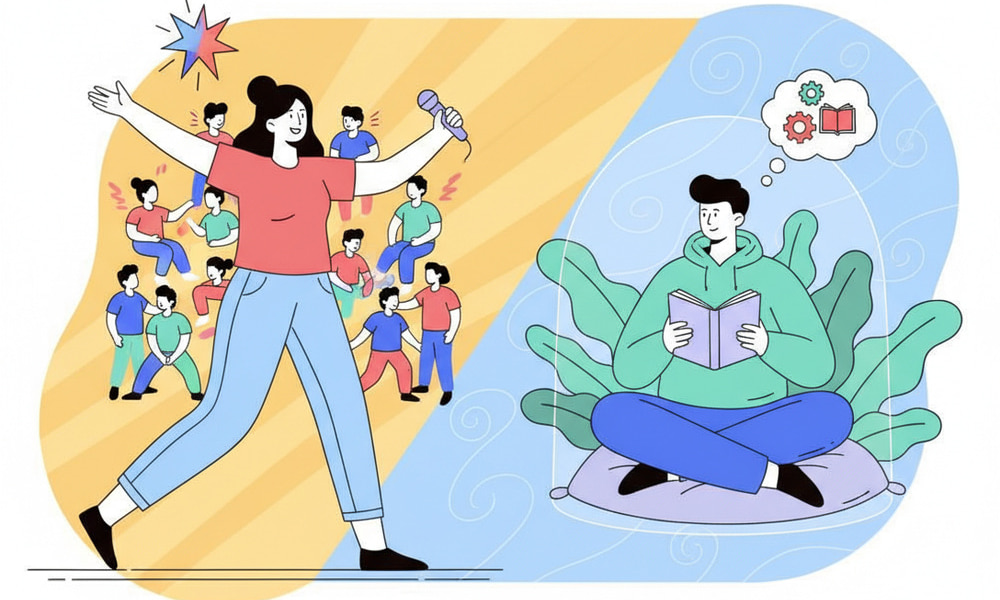
Another common curiosity involves the hybrid profile implied by what is extroverted introvert, which describes someone who enjoys people yet still requires frequent solitude to stay balanced. Many thrive with episodic, high-energy engagement followed by intentional downtime, enabling purposeful social presence without burnout. This approach compounds benefits: deeper relationships, consistent performance, and a sustainable workload. By aligning habits with temperament, people expand capacity while safeguarding clarity and creativity.
- Strengths include active listening, pattern recognition, and risk calibration.
- Benefits grow when calendars reflect energy peaks and recovery windows.
- Boundaries preserve quality of effort and keep motivation resilient.
Comparing Personality Patterns With Clear, Actionable Data
Public debates often frame the topic as introvert vs extrovert, yet the most helpful view treats both as complementary ends of a continuum. Each side contributes distinct advantages depending on the situation, whether that is rapid social coordination or meticulous solo analysis. Teams thrive when they combine rapid idea exchange with deep, independent evaluation. The challenge is building systems that surface both speed and precision without forcing people into unnatural modes all day long.
When people argue about extrovert vs introvert, they sometimes overlook contextual variables like task type, time horizon, and sensory load. Selling ideas to a broad audience calls for expressive clarity, while architecting a database schema rewards patient concentration. Strong organizations orchestrate roles so that strengths meet the right problems at the right moments. With mutual respect, the whole becomes smarter than any one preference working alone. For clarity on the practical difference between introvert and extrovert, the following comparison highlights typical patterns and actionable adjustments. Use it to calibrate workflows, meeting design, and collaboration norms in a way that raises both performance and well-being.
| Dimension | Introvert Tendencies | Extrovert Tendencies | Practical Adjustment |
|---|---|---|---|
| Energy Renewal | Recovers through quiet focus and solitude | Recovers through social engagement and activity | Alternate solo blocks with interactive sessions |
| Communication | Prefers thoughtful, concise contributions | Prefers spontaneous, verbal exploration | Share agendas early and allow written input |
| Problem-Solving | Analyzes deeply before acting | Iterates quickly in group settings | Blend solo research with rapid feedback loops |
| Environment | Low-stimulation, interruption-light spaces | Stimulating, collaborative spaces | Offer quiet zones and lively hubs side by side |
| Leadership | Listens, synthesizes, and models calm | Rallies, motivates, and mobilizes | Pair co-leads to cover both stabilization and momentum |
With this shared language, teams can replace guesswork with tangible practice changes that benefit everyone. By recognizing that psychological diversity powers innovation, leaders unlock better outcomes without demanding constant compromise. Once the systems support both reflection and expression, performance compounds as trust and clarity grow.

Self-Discovery Tools and Quizzes: Navigate with Insight, Not Labels
Introspection is powerful, yet structured tools can reveal blind spots and validate patterns you already suspect. Short assessments clarify energy flow, sensory sensitivity, and preferred working conditions, helping you advocate for the time and space you need. The goal is not to pigeonhole yourself, but to upgrade your operating system with facts about how you function best. Good interpretation emphasizes trends, not absolutes, and encourages experimentation to test insights in real contexts.
Some readers explore options similar to the phrase introvert extrovert quiz so they can benchmark tendencies and track change over time. Others prefer instruments akin to the phrase introvert extrovert test when they want more granular results and evidence-based guidance. For quick self-checks, a lightweight approach echoing the term introvert test can surface practical tweaks to scheduling, communication, and environment. Whatever the format, combine results with real-world diaries that capture energy highs and lows across a typical week.
- Use short journals to map peak focus windows and recovery needs.
- Translate insights into calendar blocks, boundary scripts, and meeting habits.
- Revisit results quarterly to refine strategies as roles and goals evolve.
Introvert or Extrovert Personality Test
Get StartedFrequently Asked Questions
-
How do I know if my quiet nature is healthy or avoidant?
Consider whether your routines leave you energized and connected, or drained and isolated. Healthy solitude restores creativity, strengthens insight, and supports meaningful relationships by preventing overstimulation. If your quiet time consistently produces clarity followed by purposeful engagement, you are likely using it well. When avoidance creeps in, reintroduce gentle exposure to valued activities, and use small, repeatable steps to rebuild social momentum without overwhelming your system.
-
Can introverts lead large teams and inspire confidence?
Absolutely, because leadership relies on credibility, judgment, and communication that fits the moment. Many quiet leaders excel at sense-making, structured decision processes, and calm crisis management. They empower experts, frame trade-offs, and create environments where people do their best work. With intentional visibility, such as concise updates and scheduled office hours, quiet leaders earn trust while honoring their natural cadence, which often brings steadiness to turbulent situations.
-
What if I enjoy people but still need a lot of downtime?
That blend is common, and the solution is rhythm, not reinvention. Plan higher-energy social blocks around strategic priorities, then schedule recovery windows so attention and mood remain stable. Use rituals, like a short walk after events, to reset your nervous system and consolidate insights. Over time, your calendar will reflect a sustainable pattern that honors both connection and restoration without forcing false extremes or one-size-fits-all expectations.
-
Are online assessments worth taking for personal clarity?
They can be helpful if you treat them as mirrors rather than verdicts, and then validate patterns against daily experience. A practical next step is to combine results from tools like the phrase am I introvert or extrovert quiz with a week of energy tracking to see what truly works. When insights converge, implement small experiments in meeting design, focus blocks, and boundary scripts. The aim is a smarter routine that scales with your goals while respecting how you renew.
-
Where do nuanced profiles fit within the spectrum?
Many people land between poles, and the blended category expressed by introvert extrovert ambivert captures that middle ground with useful flexibility. In practice, you might lean inward during research and lean outward during collaboration, switching modes as context shifts. Treat this adaptability as an asset by planning environments and workflows that let you pivot without friction. With supportive habits, you can harness the strengths of both depth and dynamism to meet complex demands.